


Mini Courses
If your client’s brows look dry, frizzy, or are difficult to control after a brow lamination, it’s important to understand what the hair is telling you before deciding what to do next.
Frizz doesn’t automatically mean the brows have been severely overprocessed, but a noticeable change in texture, elasticity or manageability can indicate that the hair has experienced more chemical stress than intended.
The most important thing? Don’t panic and don’t immediately reach for more chemical processing. First, assess the condition of the hair, identify what may have caused the result and focus on protecting the brows moving forward.
Brow lamination is a chemical restructuring treatment. During Step 1, the reducing agent alters the disulphide bonds that help give the hair its natural structure, allowing the hairs to become more flexible so they can be redirected. This process can also temporarily affect the hair’s cuticle and its ability to retain moisture. Because of this, some change in how the hair feels immediately following a chemical service can occur. However, brows that become extremely dry, frizzy, brittle or weak may indicate that the hair has been placed under excessive chemical stress.
There are several reasons this can happen:
One of the most obvious causes is overprocessing during the reducing stage. The aim of Step 1 isn’t to soften the hair as much as physically possible. We only need enough structural change to make the hair sufficiently pliable and responsive to repositioning.
If reduction continues beyond what that individual hair requires, its structure can become unnecessarily weakened. This is why processing times should never be treated as a universal rule. Some hair types respond considerably faster than others.
Learning to visually and physically assess the hair throughout processing is just as important as understanding your manufacturer’s recommended timings.
Not every lamination system is appropriate for every client.
A strong system may work beautifully on coarse, resistant brows but be unnecessarily aggressive on very fine or vulnerable hair types. Choosing between different systems and strengths should therefore be based on the condition and hair type of the client’s natural hair, rather than simply using the same product and timing on everyone.
Sometimes better results don’t come from processing for less time; they come from choosing a more appropriate system in the first place.
Always consider the history of the hair before beginning treatment. Repeated lamination, tinting and other chemical services can influence the condition of the brow hair. Hair that has already been chemically compromised may behave very differently from untreated hair and can require a much more cautious approach. This is why consultation isn’t just about checking contraindications. It’s also your opportunity to understand what has previously been done to the hair you’re about to process.
Chemical restructuring can leave the brows requiring additional conditioning and protection. Incorporating appropriate conditioning products at the correct stages of your treatment can help support the hair following processing, while good aftercare can help maintain softness, flexibility and manageability between appointments.
Protein-rich and conditioning formulas such as Mineral Botox can be particularly useful for improving the feel and appearance of chemically treated hair. However, it’s important to be realistic: a conditioning product cannot magically reverse significant structural damage once it has occurred.
Prevention will always be better than trying to repair severely compromised hair afterwards.

Using a complex, protein-rich formula such as Mineral Botox as a Step 1.5 and Step 3 can help replenish, condition and reinforce the hair following chemical processing. Its nourishing ingredients help support the keratin structure, improve strength and elasticity, and restore a smoother, healthier appearance to the brows or lashes.
Now, the real discussion here is what we should advise our clients to use for aftercare. Before we get into the depths of it, there are two main factors to cater for: the health of the hair and the price point for the client (if it is an add-on product). Several different ingredients and ingredient compositions provide huge benefits to both the hair and the skin. It will come down to the client’s individual needs, product preference and price point.
The main go-to product for aftercare is oil… but we have to be so careful with what oils we provide or suggest. Another option would be a serum, which houses a multitude of ingredients that not only hydrate the hairs, but also improve the structure of the protein chains within the hair to improve strength. However, a serum doesn’t benefit the skin as much as an oil does, but an oil doesn’t provide ingredients to repair the internal structure like a serum will. Also, if a client has a normal to coarse hair type and isn’t showing any sign of damage, an oil to aid hydration should be ideal. Whereas if a client has very fine hair, or the hair has been over-processed and damaged, then a serum that provides both hydration and proteins would be more appropriate. If the client has had a stain performed and has dry skin and is showing signs of excessive shedding, then an oil to hydrate the skin and feed the lipid barrier is a great option.
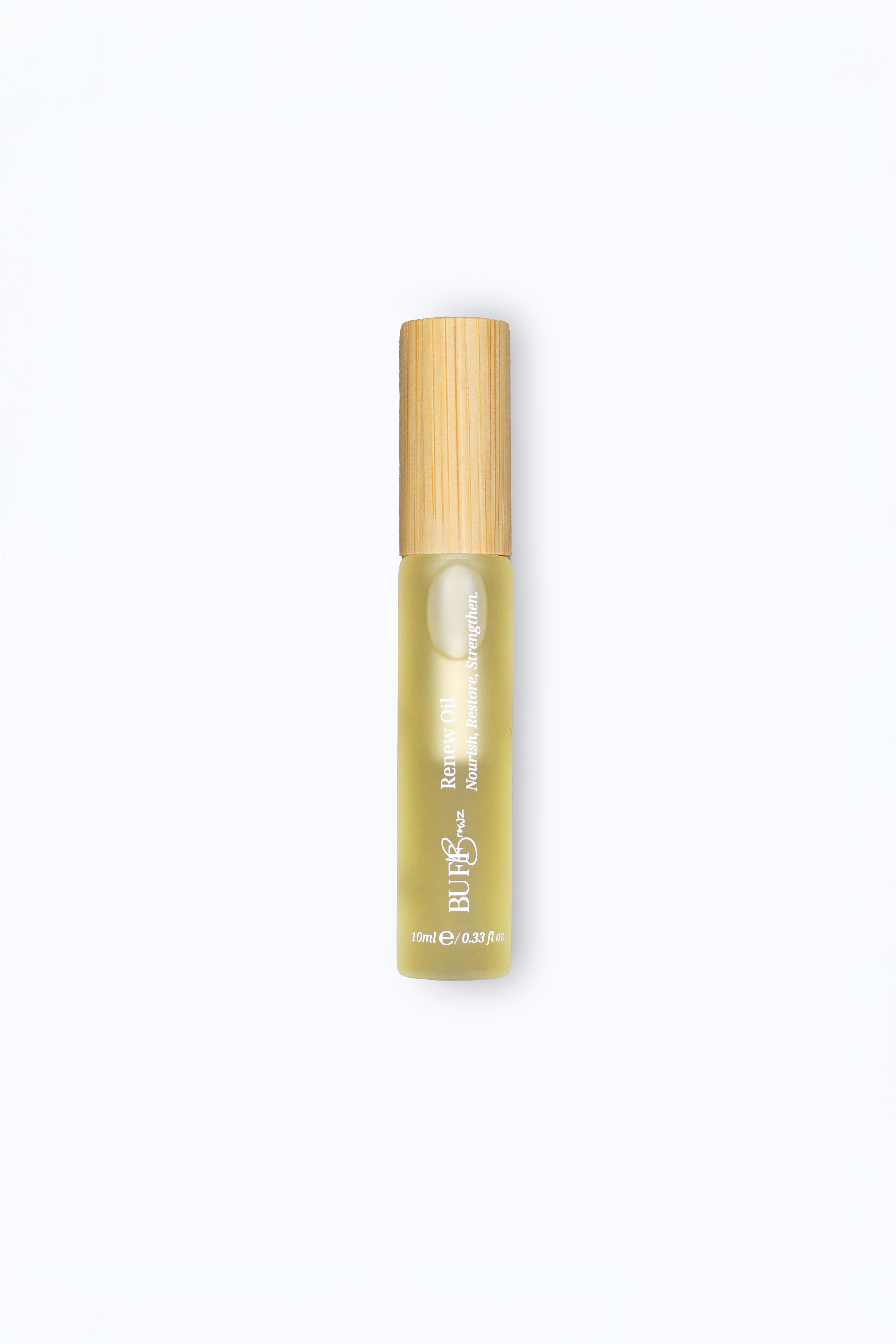
Where oil is concerned, we have to be very careful with which oils we advise to our clients. Castor Oil is a very controversial oil. It is a sealant oil and is therefore great for locking in hydration and keeping the cuticle in a flat state to prevent loss of hydration. It is a large molecule and cannot penetrate deep into the cortex to provide any benefit. Therefore, it sits on the cuticle. It is a fantastic oil to use on virgin hair that has not undergone a chemical change. However, when performing lamination, we are carrying out a chemical change. As a result, we require oils that are not sealants, and we need an oil, or a blend of oils, that are small enough to travel and reach the cortex to provide benefits. We need oils that will also replenish and hydrate the skin. We want lightweight oils that don’t weigh the hairs down, like castor oil does. The Buff Browz Renew Oil houses the perfect blend of oils.
Having said all of this, we have to look at the products used during the procedure. For example, the Buff Browz systems aren’t like other systems. They are nutrient powerhouses and contain an abundance of key ingredients that you would want to see within an aftercare product, and that will nourish and repair the hairs whilst in use. So the damage caused is so minimal. So if we use the best product from the start, the need for a complex aftercare product shouldn’t be as desperate.
Renew is a luxurious aftercare elixir meticulously crafted for both eyebrows and eyelashes.
No, and this is an important distinction.
Sometimes the final shape and structure can also make perfectly healthy hairs look frizzy, or just not quite right.
If every brow hair has been brushed vertically upwards, for example, the finished result may look fluffy, unruly or separated even though the actual hair remains in good condition. Likewise, incorrect styling, excessive manipulation or the client’s natural growth pattern can contribute to an untidy appearance.
Before diagnosing overprocessing, assess the hair itself rather than simply looking at the overall shape.
Genuinely overprocessed brow hairs may appear:
The severity matters. A slight increase in dryness is very different from hair that has become visibly weakened or is beginning to break.
If you suspect the brows have been overprocessed, stop adding unnecessary chemical stress. Don’t attempt to correct the appearance by immediately laminating them again or applying additional reducing solution. If the hair has already been compromised, further reduction could make the situation considerably worse. Instead, concentrate on conditioning, protecting and gently styling the existing hair.
A nourishing treatment such as Mineral Botox or the Restore Mask can be used where appropriate to improve strength, manageability and appearance. Products containing conditioning agents, proteins and amino acids are essential.
The aim at this stage is no longer to achieve the best possible lamination result. Hair integrity comes first.
When appropriate, re-laminating the brows using the Buff Browz Cysteamine System may be the preferred approach. Cysteamine is derived from cysteine, an amino acid that plays an important role in the keratin structure of the hair. This makes Cysteamine systems a great option when you want to effectively restructure the brows while taking a more hair-conscious approach to the lamination process.


Homecare becomes particularly important when the brows are feeling dry following lamination.
Encourage your client to treat their brows gently and consistently rather than trying to compensate with excessive amounts of product.
Depending on your recommended aftercare protocol, this may include:
If the hair is genuinely compromised, don’t rush into another lamination simply because the shape has dropped or become difficult to style. The existing hair cannot recover in the same way living skin can. Products can improve the condition, improve manageability, reduce dryness and temporarily improve the appearance, but severely damaged hair ultimately needs to grow out.
If the hair still feels brittle, weak or significantly compromised when the client returns to their next appointment, postpone their next service. A healthy brow is always more important than sticking to an appointment schedule.
Review the previous treatment and consider where the excessive stress may have occurred.
The goal isn’t simply to shorten your processing time at the next appointment. It’s to understand why that particular hair type responded the way it did.
Fear of overprocessing can sometimes create another problem: underprocessing.
Removing Step 1 prematurely on every client isn’t the solution. Coarse, dense and resistant hair types may genuinely require more processing than fine and delicate hair types. If Step 1 is removed before sufficient reduction has occurred, the hairs may remain resistant and quickly return towards their natural growth pattern.
Successful lamination therefore sits between two extremes: underprocess the hair, and you may not achieve enough structural change. Overprocess it, and you risk unnecessarily compromising its integrity.
The skill is learning to recognise when you’ve reached the correct point for the individual hair in front of you.
During Step 1, it’s crucial to regularly check the hair’s movement.
Assess first.
Look at the texture, strength, elasticity and manageability of the hair. Consider the client’s previous chemical history, your system choice, processing time and technique.
If the hair is genuinely compromised, prioritise conditioning and protection, postpone further chemical services where necessary and allow the damaged hair time to grow out.
And most importantly, use the experience to improve your assessment at the next appointment. Great brow lamination isn’t about achieving the most dramatic possible result. It’s about creating beautifully redirected brows while preserving as much of the hair’s strength, condition and integrity as possible.

Want more information?
Brow Lamination Troubleshooting Masterclass | 20 Minutes
Learn more with our free, full-length course.


